
Introduction: A Digital Front Opens
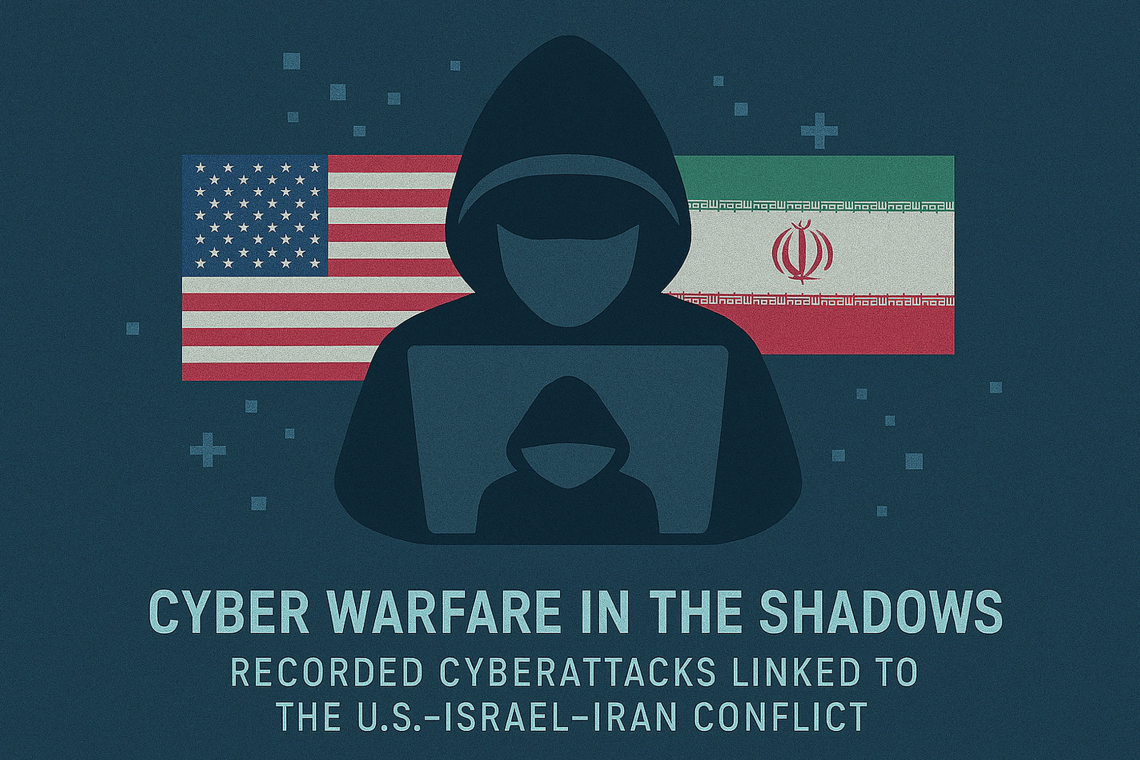
As military tensions between the United States, Israel, and Iran escalated into open confrontation between June 2025 and March 2026, cyberspace rapidly emerged as a parallel battlefield. Intelligence agencies, cybersecurity firms, and international observers have documented a sustained surge in state‑linked cyber operations, hacktivist campaigns, and infrastructure‑focused attacks directly tied to the conflict. These activities mark one of the most intense periods of cyber conflict since the Russia‑Ukraine war, with real‑world consequences extending far beyond the Middle East.
Unlike isolated espionage campaigns of the past, this conflict demonstrated how cyber operations are now used in coordination with kinetic strikes, psychological warfare, and economic pressure, blurring the line between military and civilian domains.
Phase One: The Israel–Iran Cyber Exchange (June 2025)
The cyber dimension intensified following Israel’s June 13, 2025 strikes on Iranian nuclear and military facilities, which triggered immediate digital retaliation. Iranian authorities accused Israel of launching a “massive cyber war” against government and communications infrastructure, prompting Tehran to impose temporary nationwide internet restrictions to limit damage and control information flow.
One of the most prominent incidents occurred on June 17, 2025, when the Israeli‑linked group Predatory Sparrow (Gonjeshke Darande) claimed responsibility for a destructive cyberattack against Bank Sepah, a major Iranian state‑owned bank with ties to the Islamic Revolutionary Guard Corps (IRGC). The attack caused widespread outages, disrupting account access, card payments, and withdrawals across Iran.
Shortly afterward, Nobitex, Iran’s largest cryptocurrency exchange, was breached, resulting in the theft and subsequent “burning” of tens of millions of dollars in digital assets. Analysts widely assessed both attacks as state‑aligned operations designed to undermine financial stability and public confidence.
Phase Two: Iranian Retaliation and Regional Spillover
Iran’s cyber response relied heavily on a mix of state‑affiliated advanced persistent threat (APT) groups and loosely aligned hacktivist collectives. Groups such as MuddyWater (APT34), APT33, and OilRig intensified phishing, credential‑harvesting, and disruptive campaigns against Israeli targets and regional allies.
Israeli cybersecurity firms reported a 700% increase in malicious activity within days, including distributed denial‑of‑service (DDoS) attacks, fake emergency alerts, and data‑leak threats targeting government agencies, financial institutions, and telecommunications providers.
Hacktivist involvement also surged. Researchers estimate that more than 100 pro‑Iranian hacktivist groups declared participation, launching website defacements and nuisance attacks aimed more at psychological impact than physical disruption. While many claims were exaggerated, the volume of activity strained defensive resources and amplified public fear.
Phase Three: U.S. Entry and Globalized Cyber Risk (February–March 2026)
The cyber conflict entered a new phase after the joint U.S.–Israeli military operation on February 28, 2026 (Operation Epic Fury / Roaring Lion). Within hours, threat‑intelligence firms observed a coordinated spike in cyber activity linked to Iran‑aligned actors across multiple regions.
According to Palo Alto Networks Unit 42, Iran’s domestic internet connectivity dropped to as low as 1–4%, limiting centrally coordinated operations. However, Iran‑aligned actors operating abroad continued attacks with increased autonomy, targeting entities perceived as supporting U.S. or Israeli military operations.
U.S. federal agencies warned that Iranian‑linked hackers could target critical infrastructure, including energy, water, transportation, and financial systems. Subsequent investigations confirmed intrusion attempts against U.S. banks, airports, healthcare suppliers, and defense‑adjacent software companies, some involving previously undocumented malware strains.
Documented Impact on Civilian and Economic Systems
While large‑scale blackouts or catastrophic failures were largely avoided, the economic and psychological impact was significant. Cyber incidents contributed to volatility in global markets already shaken by disruptions in the Strait of Hormuz, supply‑chain delays, and energy price spikes.
In the United States, cybersecurity officials emphasized that even low‑level but persistent cyber disruptions could erode trust in public institutions and strain emergency response systems over time. Financial services, healthcare supply chains, and municipal utilities were identified as particularly high‑risk sectors.
Strategic Significance: What This Conflict Revealed
Analysts at the Atlantic Council and CSIS concluded that the U.S.–Israel–Iran confrontation demonstrated that cyber operations now function as a permanent, integrated domain of warfare. Rather than delivering decisive blows, cyberattacks provided incremental advantages disrupting services, shaping narratives, and signaling capability without crossing traditional thresholds of war.
Equally important was the role of plausible deniability. The use of proxies, hacktivists, and hybrid influence operations complicated attribution and allowed states to escalate pressure while limiting diplomatic fallout.
Conclusion: A Lasting Cyber Precedent
The recorded cyberattacks linked to the U.S.–Israel vs. Iran war underscore a defining reality of modern conflict: cyber warfare is no longer preparatory or peripheral it is continuous, adaptive, and global. Even after ceasefires or pauses in kinetic fighting, cyber operations persist, targeting civilian infrastructure, private companies, and public trust.
As governments and organizations digest the lessons of this conflict, one conclusion stands out: future wars will not begin or end on the battlefield alone. They will unfold silently across networks, servers, and systems that underpin daily life worldwide.
Found this article interesting? Follow us on X(Twitter) ,Threads and FaceBook to read more exclusive content we post.
